Inside Taiwan Taoyuan International Airport’s Terminal 3: Why Do You Sometimes Need a Shuttle Bus, and How the MARS Gate Design Works
💺 傑西大叔 x 易遊網折扣碼:點擊專屬連結,全球機票1%【ezkolf1】全球訂房3%優惠【ezkolh3】
🇯🇵 日本折價券總整理):BIC CAMERA、近鐵、大丸、松板屋、札幌藥妝
加入LINE社群『不在機場就在去機場的路上』 入群密碼『RJAA(後方寫出一個台灣小吃)』
With over 700 daily flight movements at Taiwan Taoyuan International Airport (TPE), optimizing aircraft operations is a complex, behind-the-scenes puzzle that passengers rarely get to see.
The answer to this puzzle ultimately comes down to a very specific detail printed on your boarding pass: which gate you are assigned, and whether there is an aerobridge waiting for you.
Following the operational launch of the Terminal 3 North Concourse, unofficial statistics indicate an increase of roughly 5% in flights able to utilize aerobridges. In other words, out of every 100 flights, five more groups of travelers can bypass the stairs and tarmac shuttle buses, waiting comfortably in the departure lounge right up until boarding time.
Having walked through the North Concourse countless times since its very first day of trial operations, Jesse has noticed how several design choices all point to a single objective: leveraging smarter scheduling to reduce the number of passengers needing remote bus transfers while streamlining overall terminal operations.
In this article, we’ll take a closer look at two distinct design features of the North Concourse, plus a must-visit spot that aviation enthusiasts simply cannot miss.
That Time You Had to Take a Shuttle Bus to Your Plane
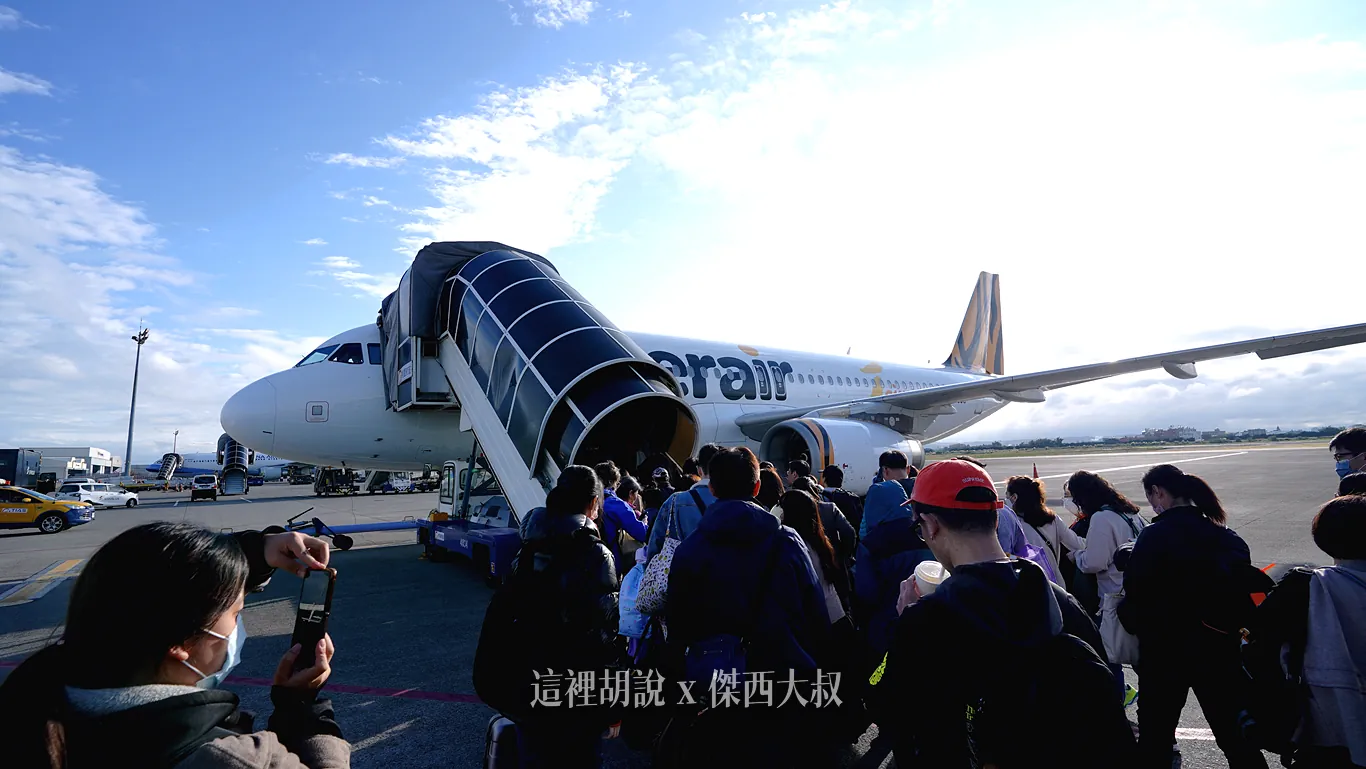
There is a boarding experience that frequently triggers groans on social media, yet routinely delights aviation geeks: the remote parking stand.
When your boarding pass lists a remote gate (typically ending in an “R,” such as B1R or C5R at Taoyuan Airport), arriving at the gate reveals a distinct absence of an aerobridge. Instead, you walk down the stairs, board a uniquely styled airport shuttle bus, cruise across the vast expanse of the tarmac, step off right next to the aircraft, and haul your carry-on luggage up a set of mobile stairs.
In the summer, you bake on the tarmac. In the rain, you shield your head and sprint those few steps. Not to mention Taiwan’s notorious afternoon thunderstorms.
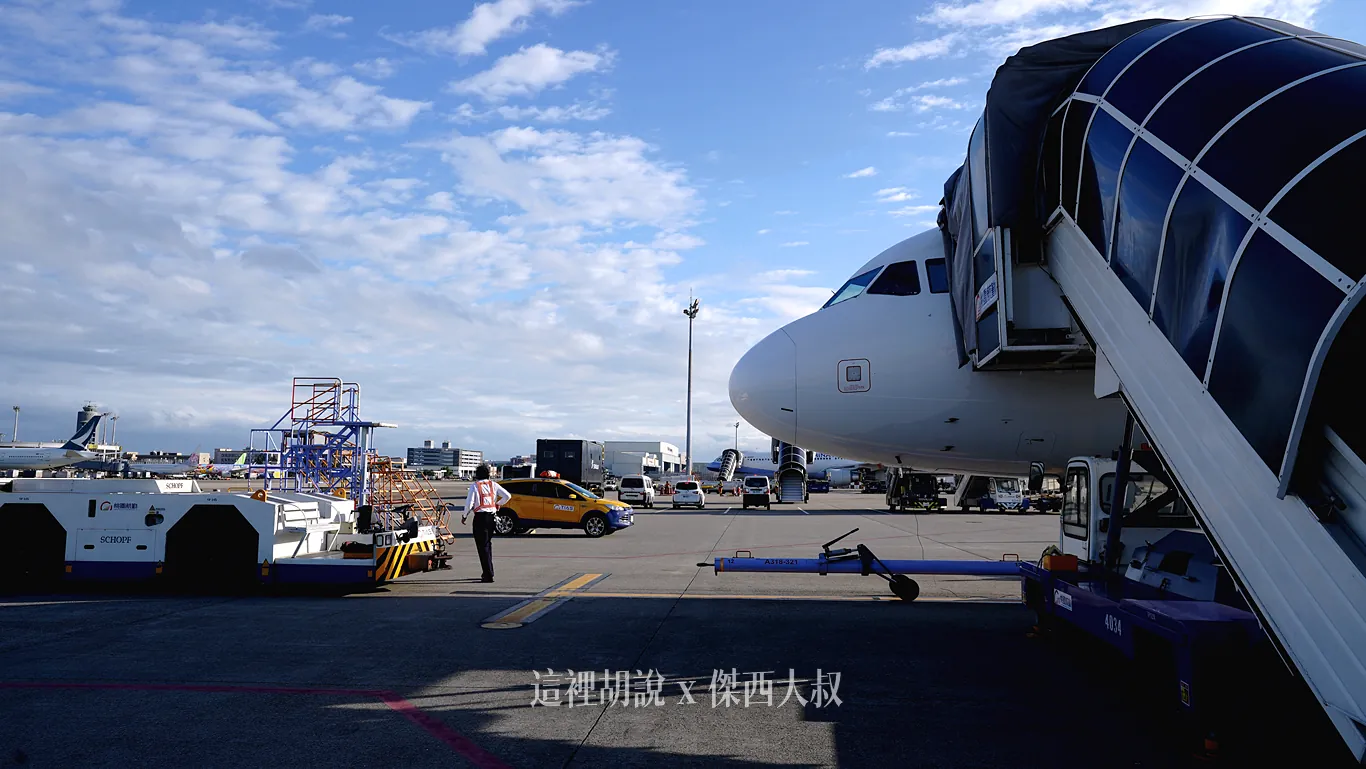
This procedure is known as remote stand boarding. It isn’t due to anyone’s oversight; rather, it is a necessary arrangement when boarding gates are in short supply. Because an airport’s total flight capacity has inherent physical limits—combined with situations where aircraft must be parked at remote hardstands (also called remote or apron bus stands) due to scheduling and turnaround needs—these stands lack direct terminal connections and aerobridges, requiring passengers to use mobile staircases.
Gate assignments require factoring in an immense array of variables, including the terminal handled by the ground handling agent, baggage security screening requirements, turnaround schedules for preceding and succeeding flights (moving aircraft takes time), gate occupancy overruns (overstays disrupt subsequent operations), the positioning of ground support equipment, and priority slots allocated to specific flights. Airlines cannot unilaterally make these decisions; instead, the airport coordinates assignments based on these strict operational rules and limitations.
With the opening of Taoyuan Airport’s Terminal 3 North Concourse, everything from the aerobridges to the waiting areas has been meticulously designed to minimize the frequency of remote boardings. Current unofficial statistics indicate that the North Concourse enables roughly 5% more flights to utilize aerobridges, allowing passengers to wait comfortably indoors shielded from changing weather conditions outside.
First Up, Something You Might Miss: The MARS Parking System
Taoyuan Airport actually features two unique gates, D14R and D15R, which despite featuring the letter “R,” are not traditional remote gates.
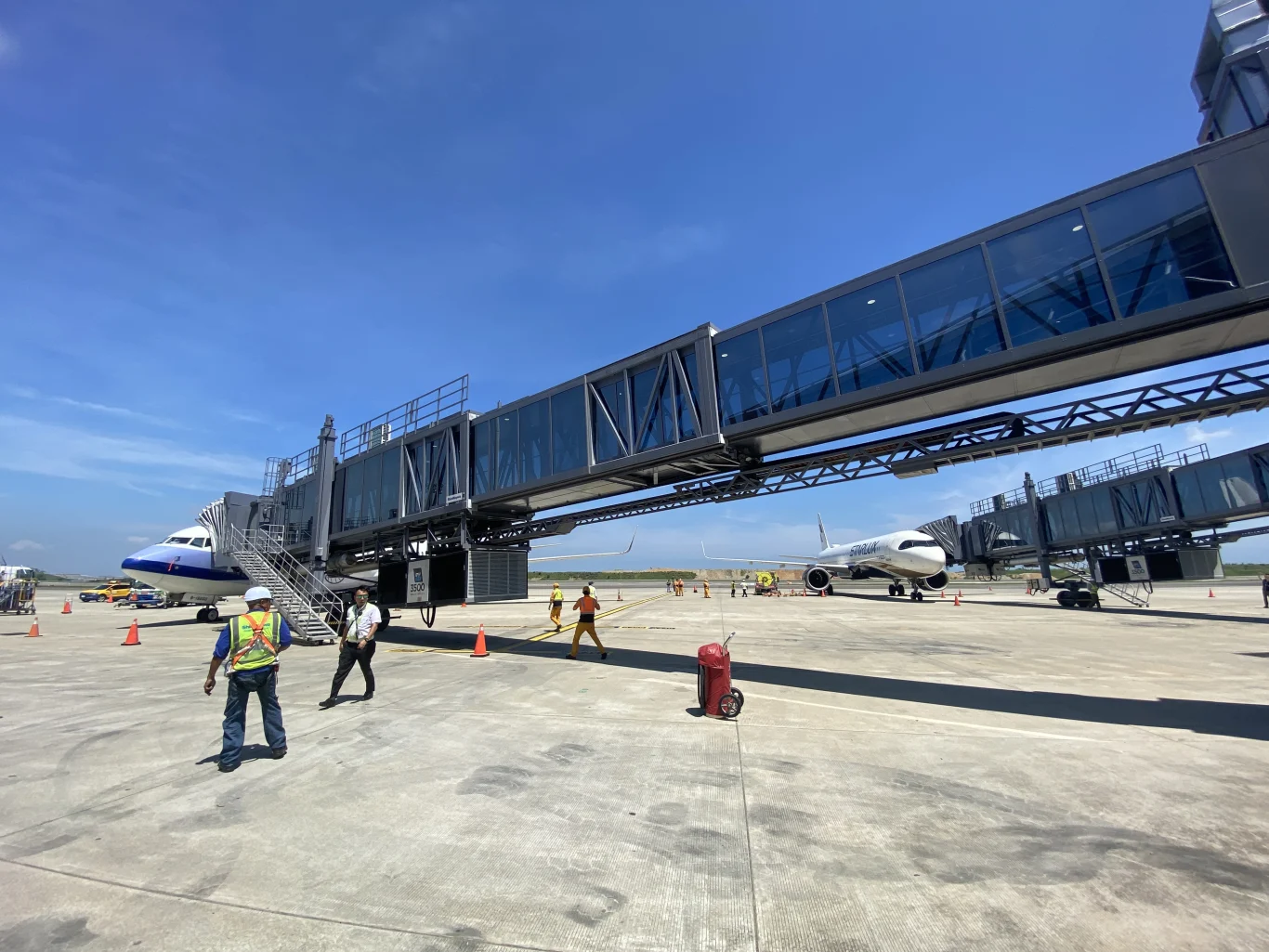
As the very first traveler to step foot inside the North Concourse, Jesse did plenty of homework beforehand. The North Concourse incorporates several design features that clearly differentiate it from Terminals 1 and 2, with the MARS system standing out as a prime example.
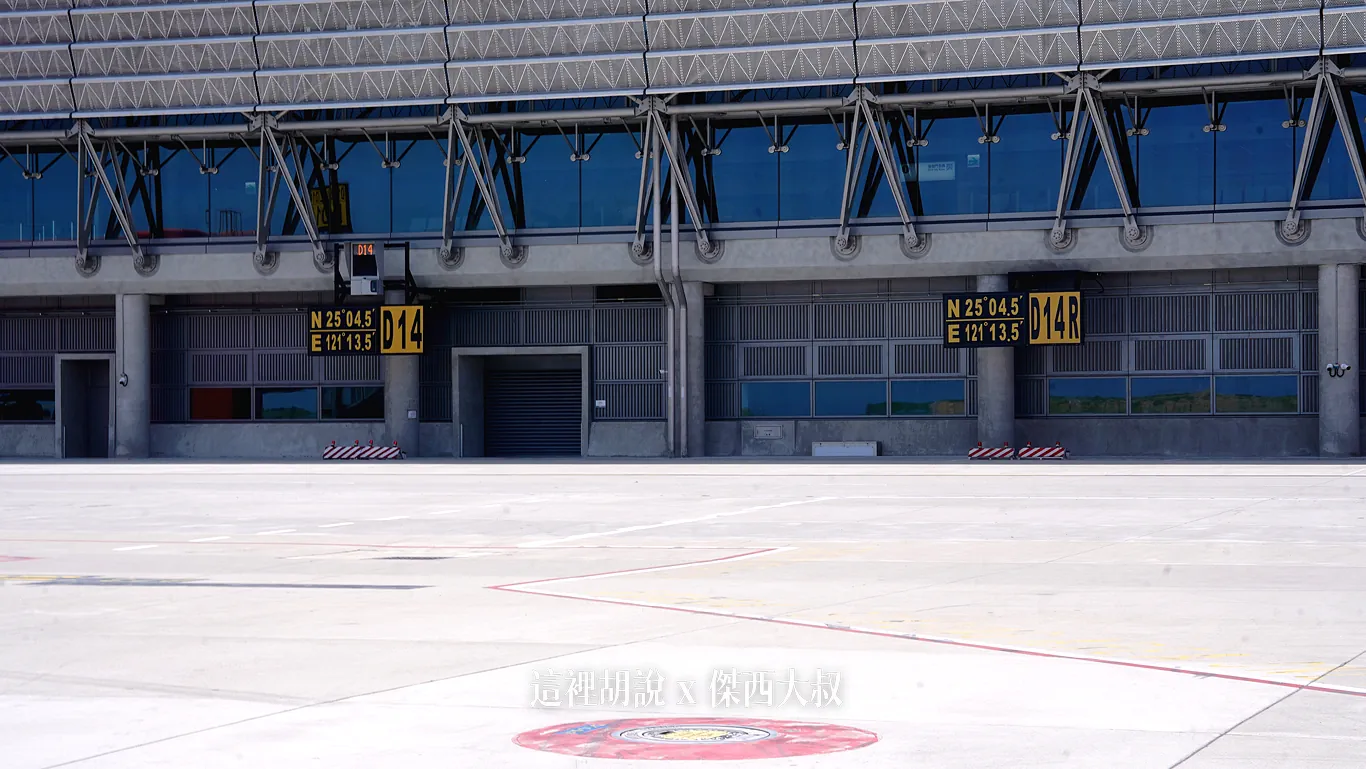
If you happen to be boarding at Gates D14 or D15 in the North Concourse and glance out the window, you’ll notice a specialized configuration known as MARS—short for Multi-Aircraft Ramp System. This marks the very first airport installation of the MARS parking system in all of Taiwan.
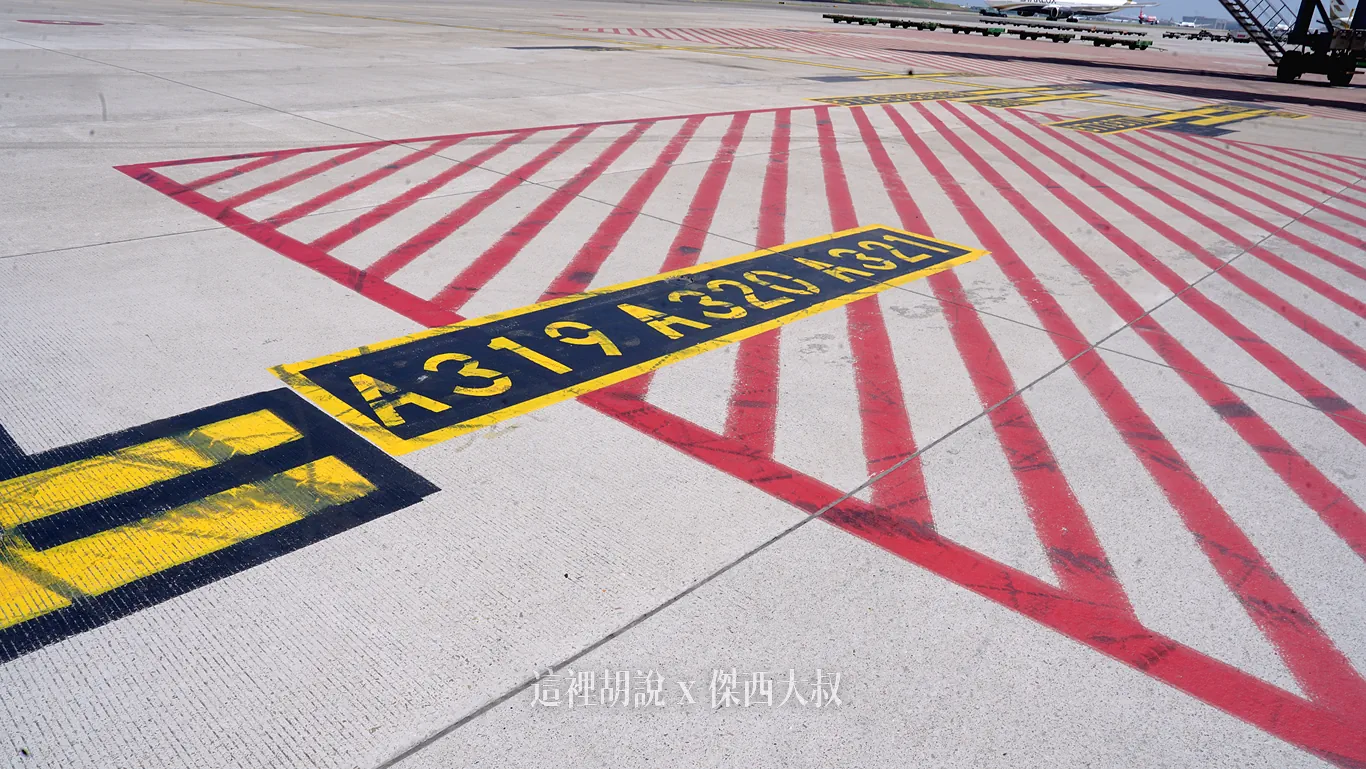
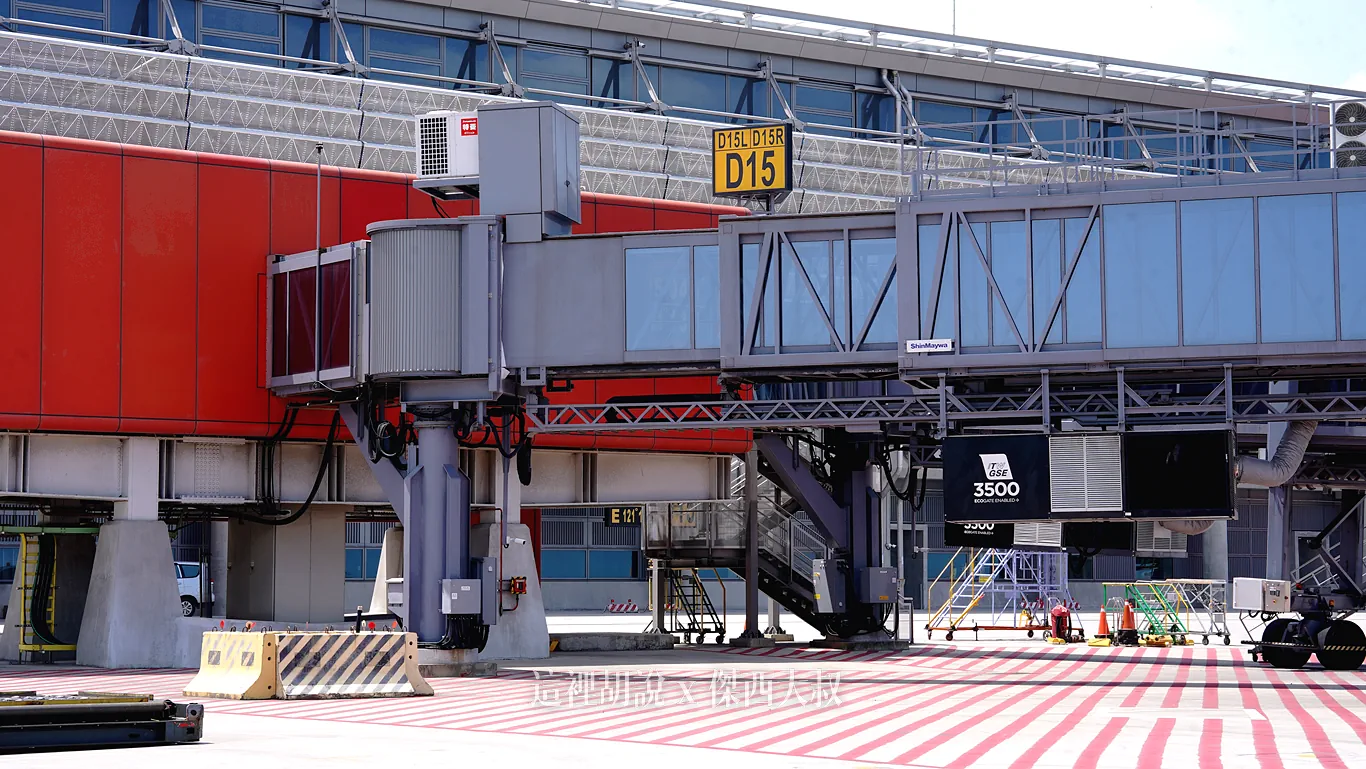
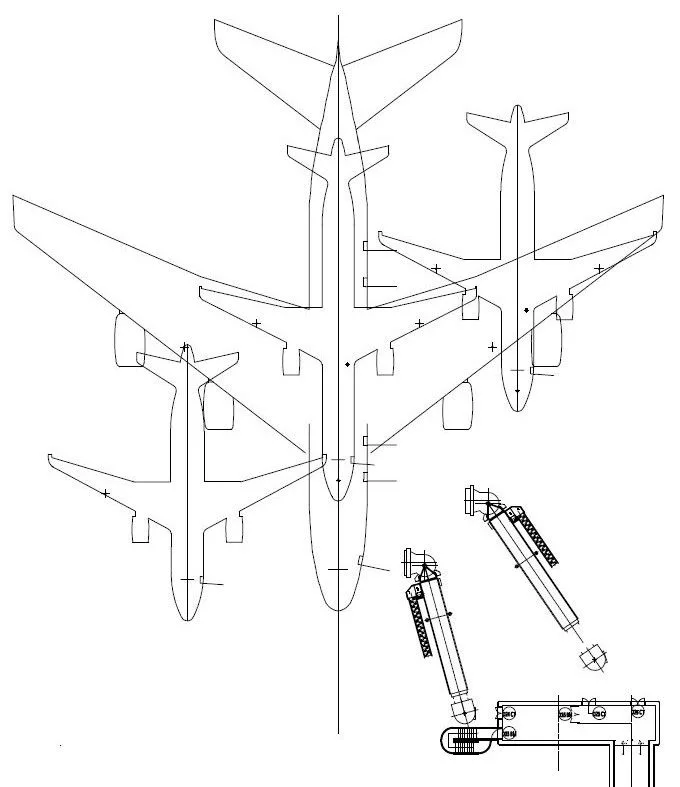
Its configuration functions as follows:
- It can park one wide-body aircraft.
- Alternatively, it can park two narrow-body aircraft (such as the A320 family or B737 family).
- Both operational setups connect directly to aerobridges for passenger boarding and deplaning, eliminating the need to bus travelers out to the apron.
- The ground is equipped with integrated fueling hydrants, allowing two aircraft to undergo turnaround servicing simultaneously.
Thinking of it in terms of automobile parking makes it instantly intuitive: a single parking bay can either hold one large bus or two compact cars.
During the early morning peak hours, two MARS bays can simultaneously accommodate four A321 aircraft—meaning passengers on four separate flights get to skip the shuttle bus entirely.
Jesse’s Note: This type of parking stand layout is ubiquitous in the United States, where domestic routes are predominantly operated by narrow-body jets, requiring airports to pack more flight frequencies into identical footprints. Taiwan previously had no operational need for this; now, it does.
One Bay, Two Planes: How Do the Gates Handle It?
If a single aircraft stand accommodates two airplanes, how does that translate to the terminal interior?
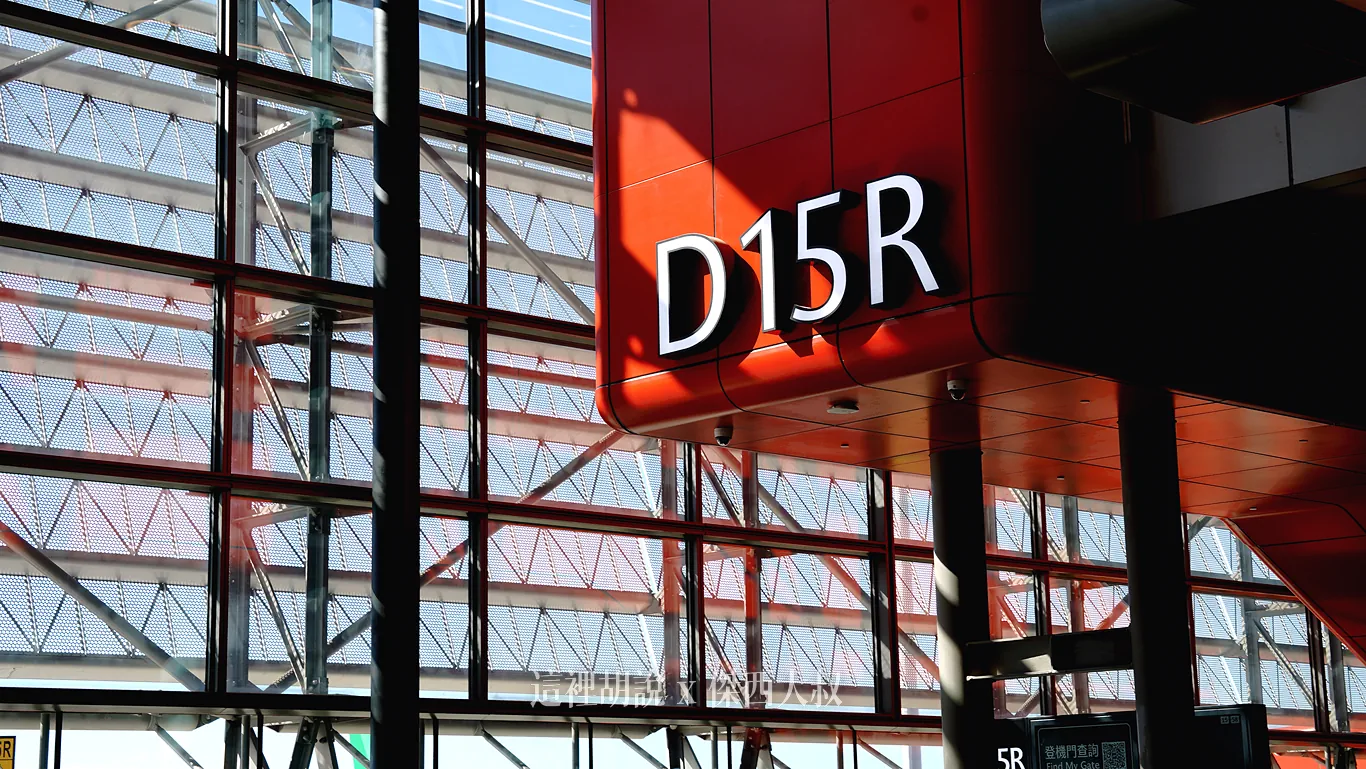
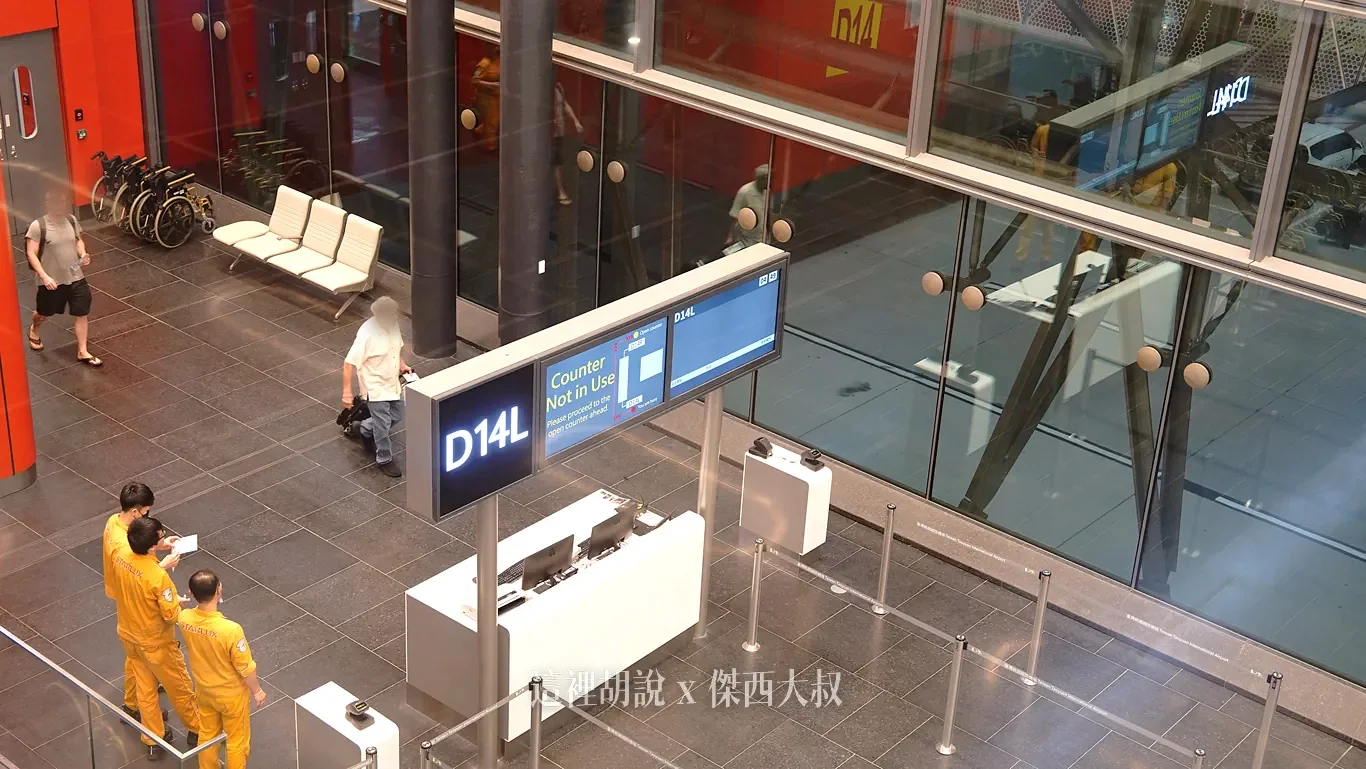
The answer is written right on the gate numbers. Because Gates D14 and D15 are outfitted with MARS, they feature subdivided designations: D14L/D14R and D15L/D15R. “L” stands for left, and “R” stands for right. The two aircraft parked on the MARS bay each utilize their own distinct boarding desk.
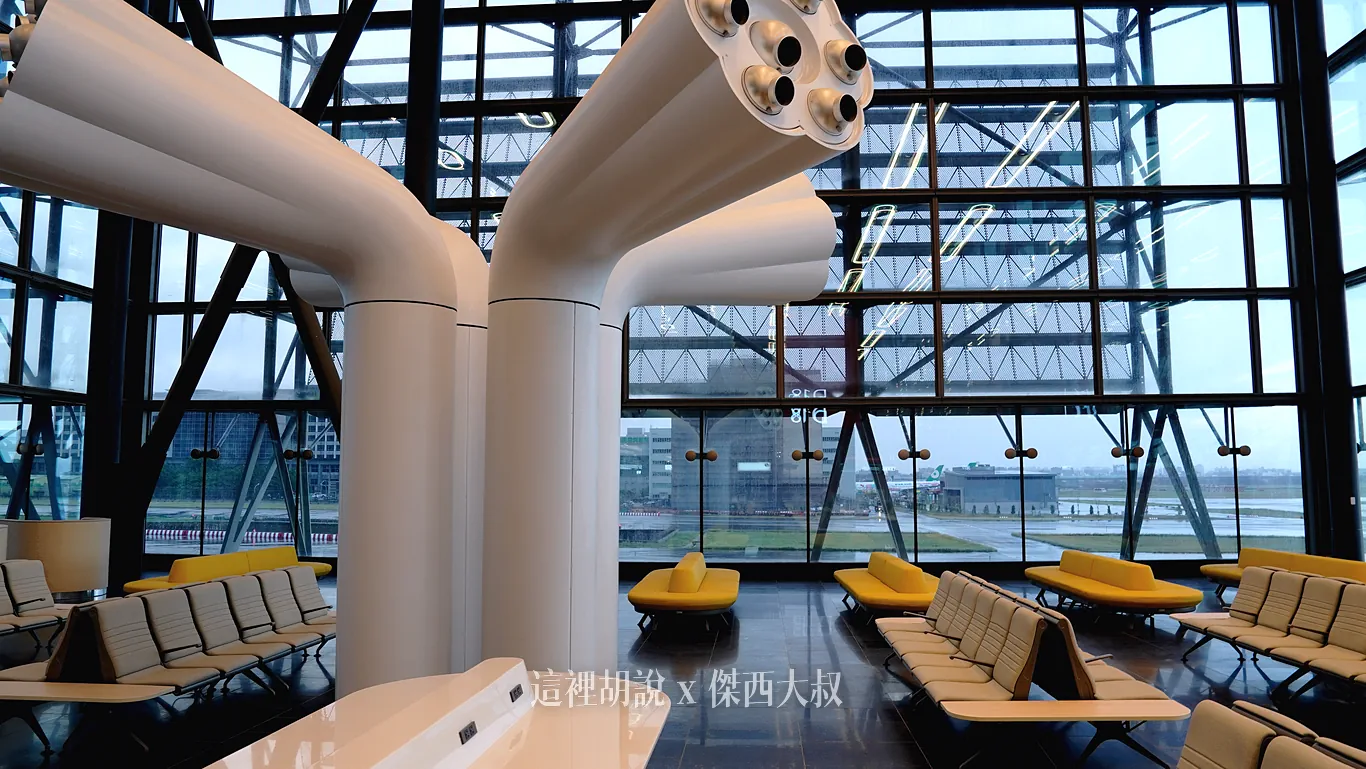
Walking up to the gate reveals that both sides of the boarding desk are fully equipped for check-in and boarding operations, displaying separate flight information when dual operations are underway. In contrast, traditional gates at Taoyuan Airport historically mapped a single gate to an exclusive waiting lounge. Within the Terminal 3 North Concourse, dedicated isolated lounges have been replaced by a continuous, open-flow seating expanse that maximizes spatial efficiency.
One important detail to note: Jesse has not yet experienced or witnessed dual-side simultaneous boarding operations at these gates. Taoyuan Airport’s current flight volumes do not yet necessitate this capability, meaning most flights currently utilize only the left side for boarding. Approaching the right-hand side reveals a display screen that does not show flight details, but instead directs passengers to the opposite side, preventing any accidental mix-ups.
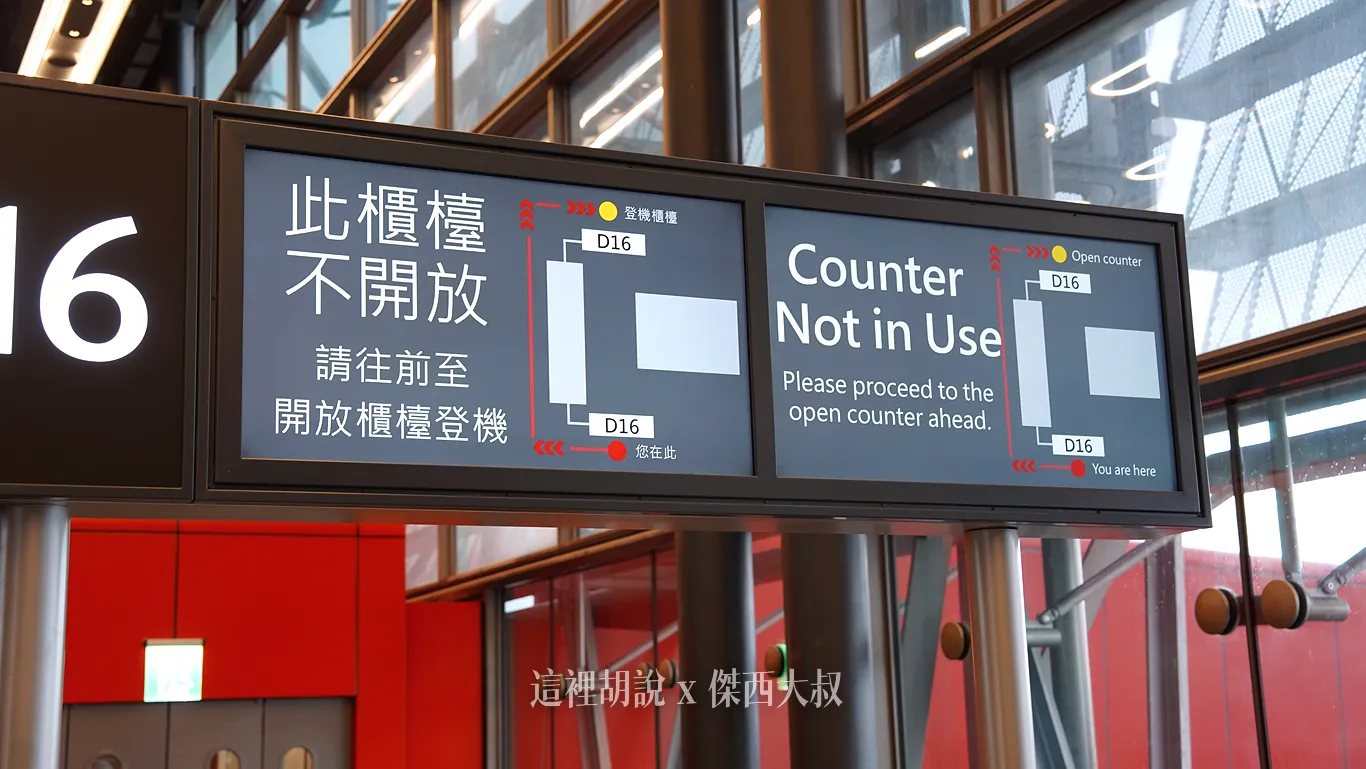
Future operational phases will introduce synchronized dual-side MARS boarding alongside regular gate procedures, substantially increasing terminal capacity to handle a greater volume of flights.
These innovative designs adapt seamlessly to diverse operational scenarios, boosting efficiency for both airlines and airport management alike.
Inside the MARS Aerobridge
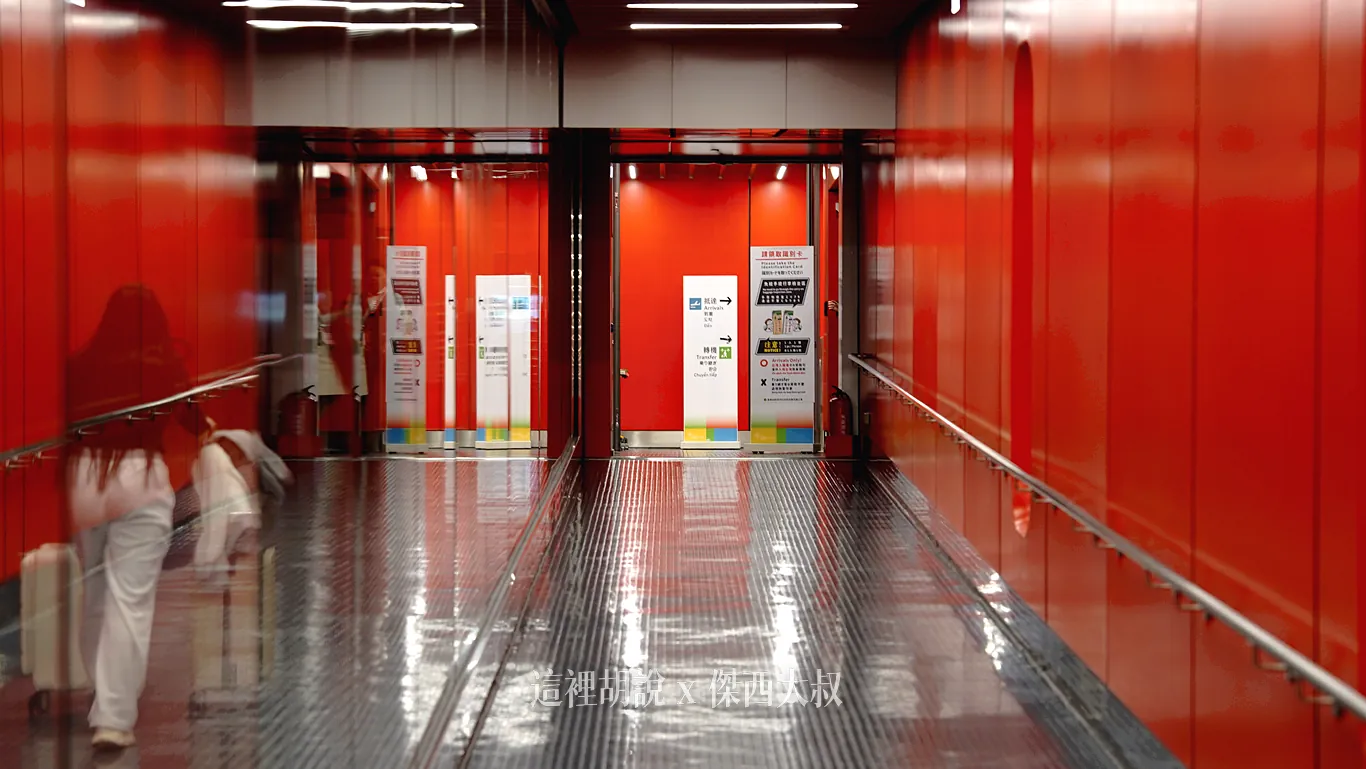
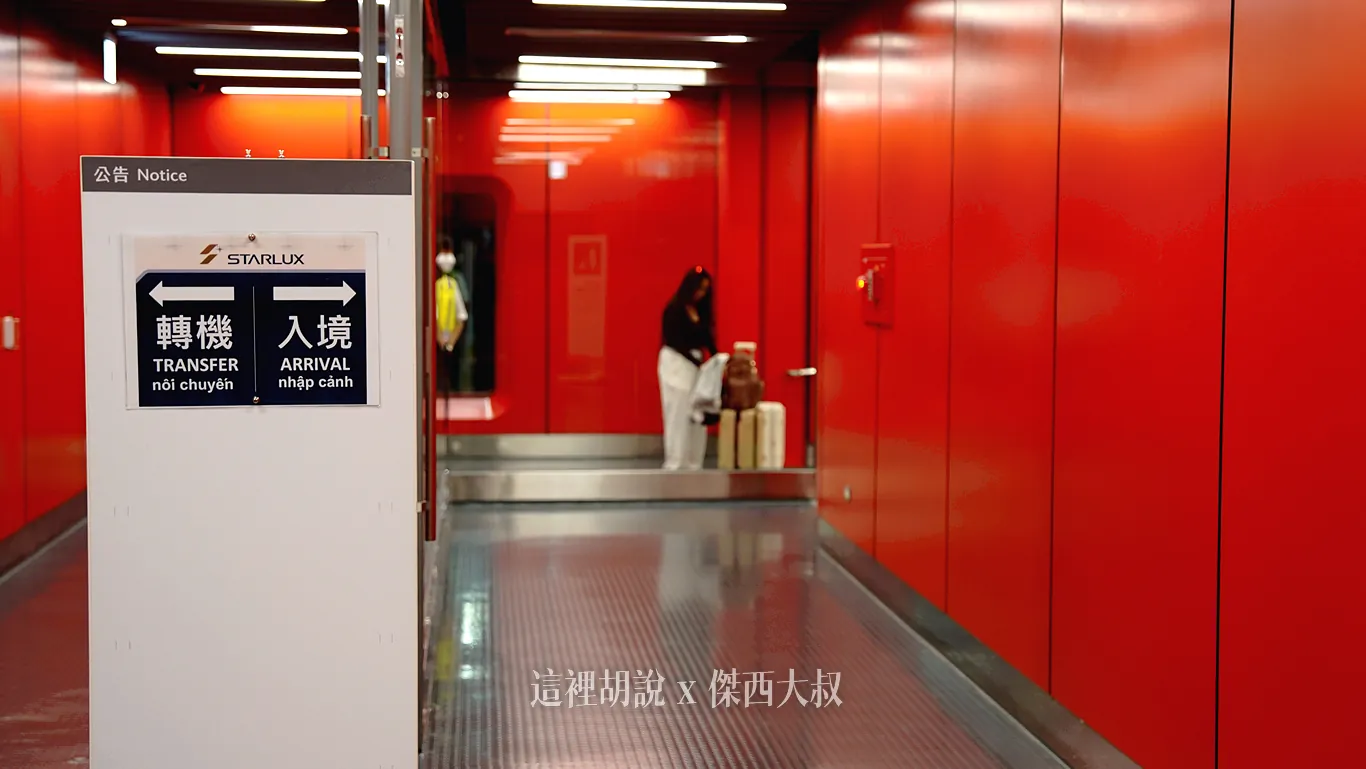
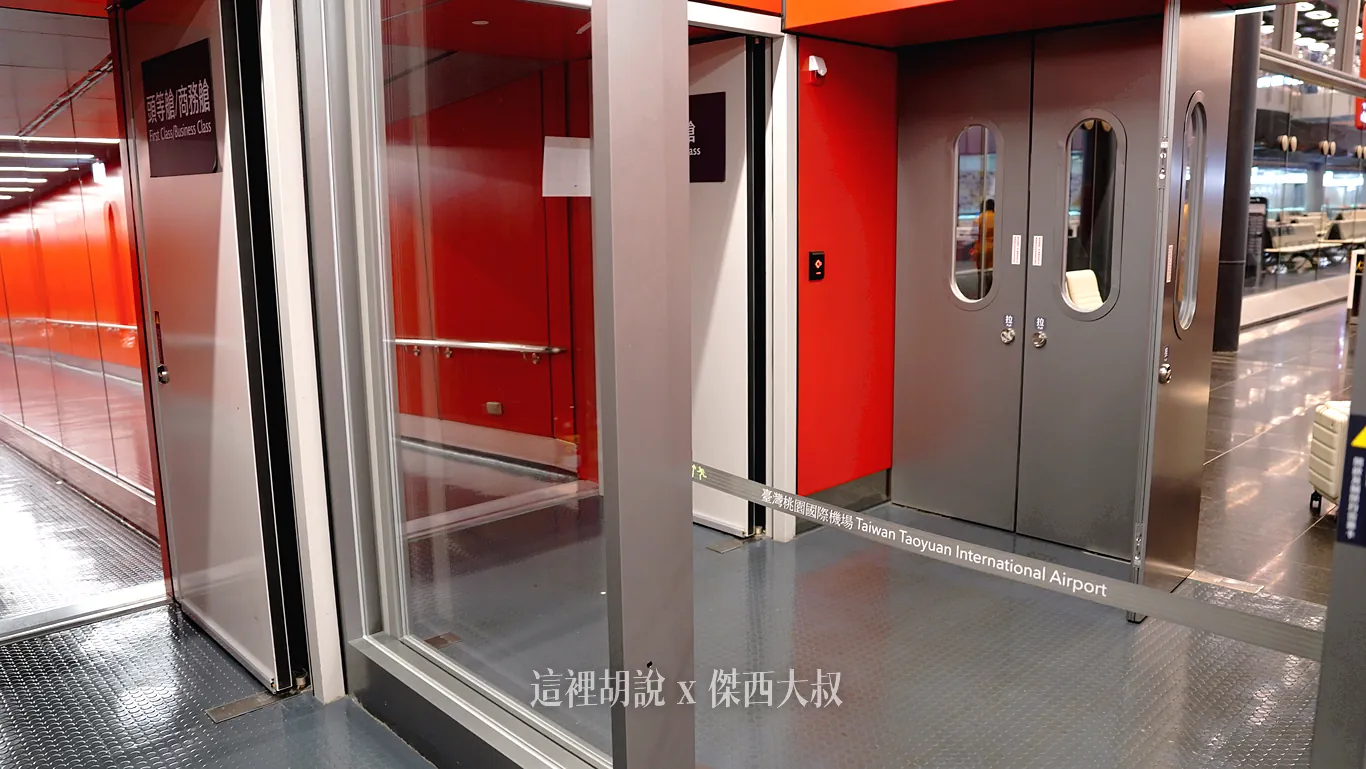
Additional note: Under one-stop security protocols, travelers transiting through Taiwan from the United States or Canada bound for other international destinations are exempt from secondary security screening upon arrival at Taoyuan Airport. After disembarking and undergoing a quick boarding pass re-verification by ground staff, passengers proceed directly into the departure concourse. While Terminals 1 and 2 require travelers to walk back through active departure lounges, the Terminal 3 North Concourse utilizes a redesigned multi-level layout that makes transit passenger flows far more intuitive and convenient.
The Ultimate Plane-Spotting Vibe: Gate D18
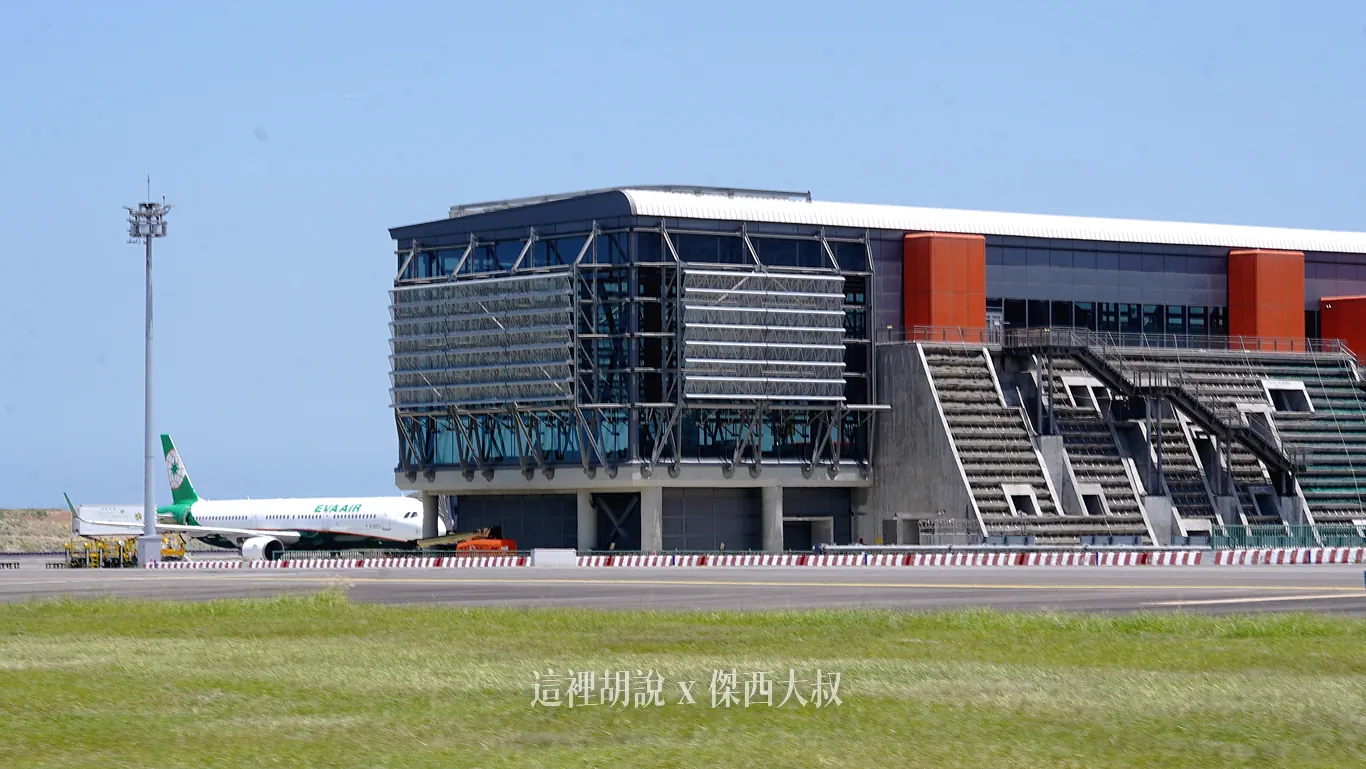
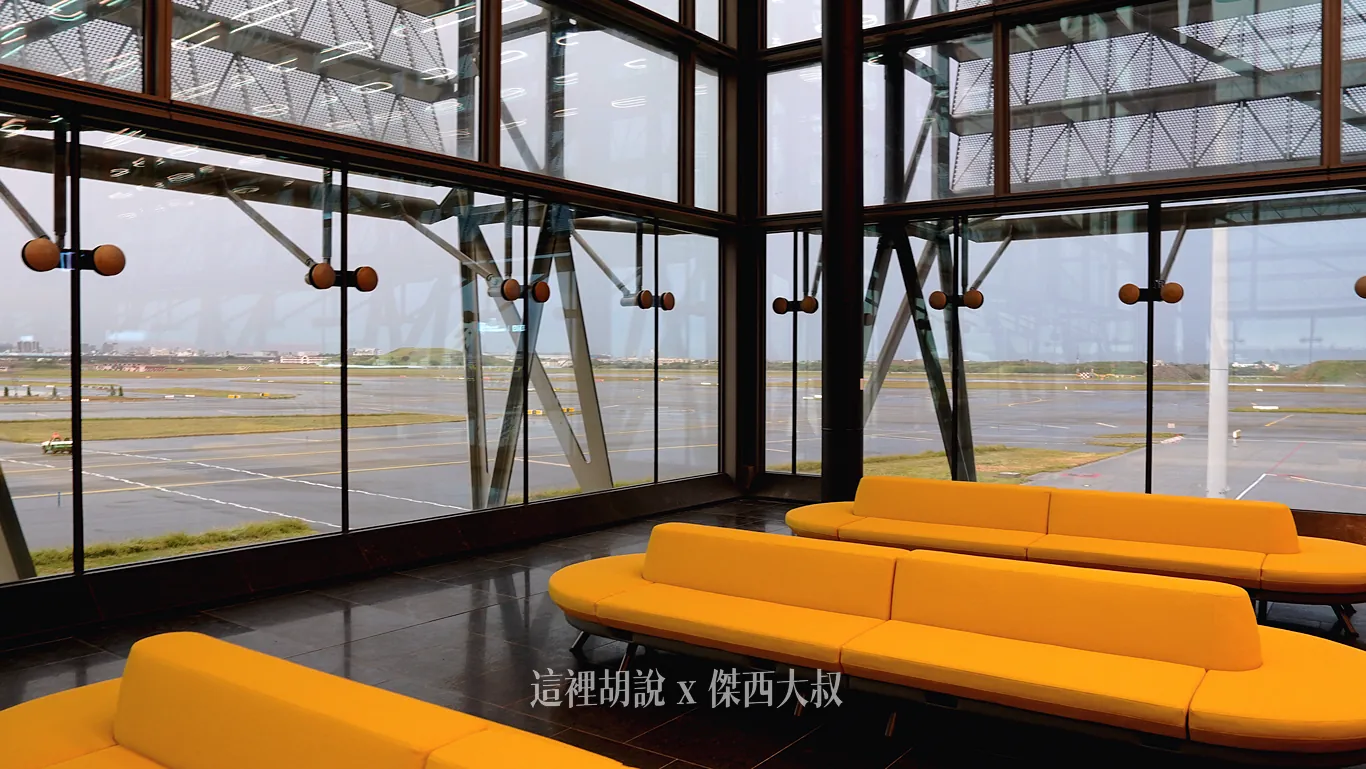
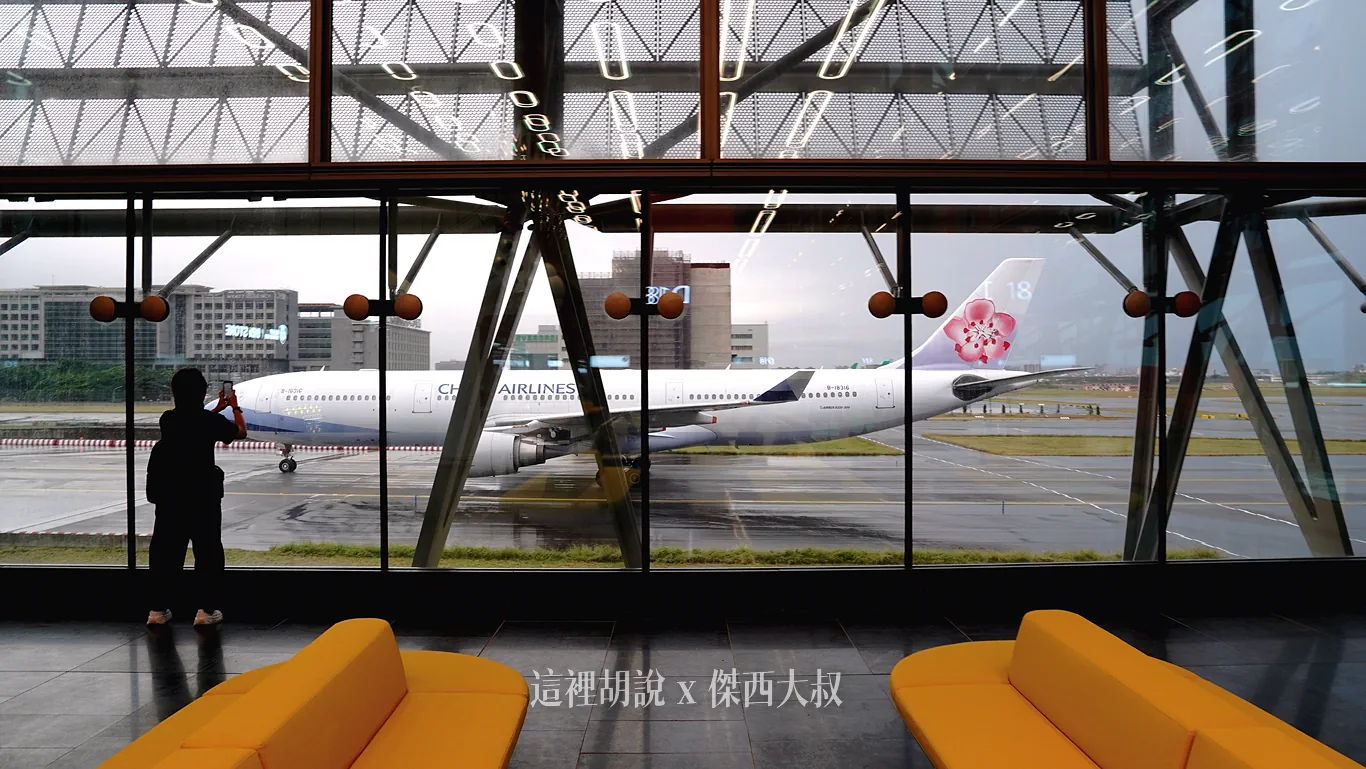
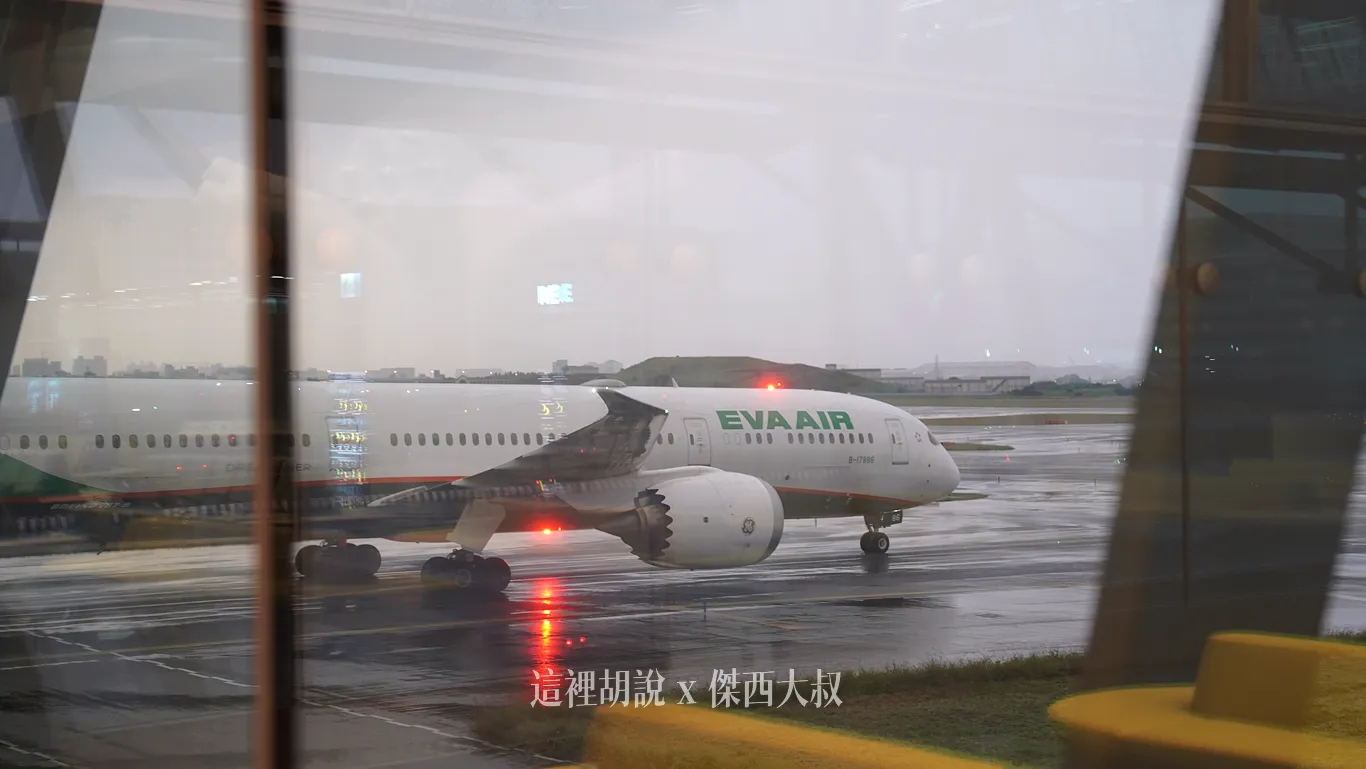
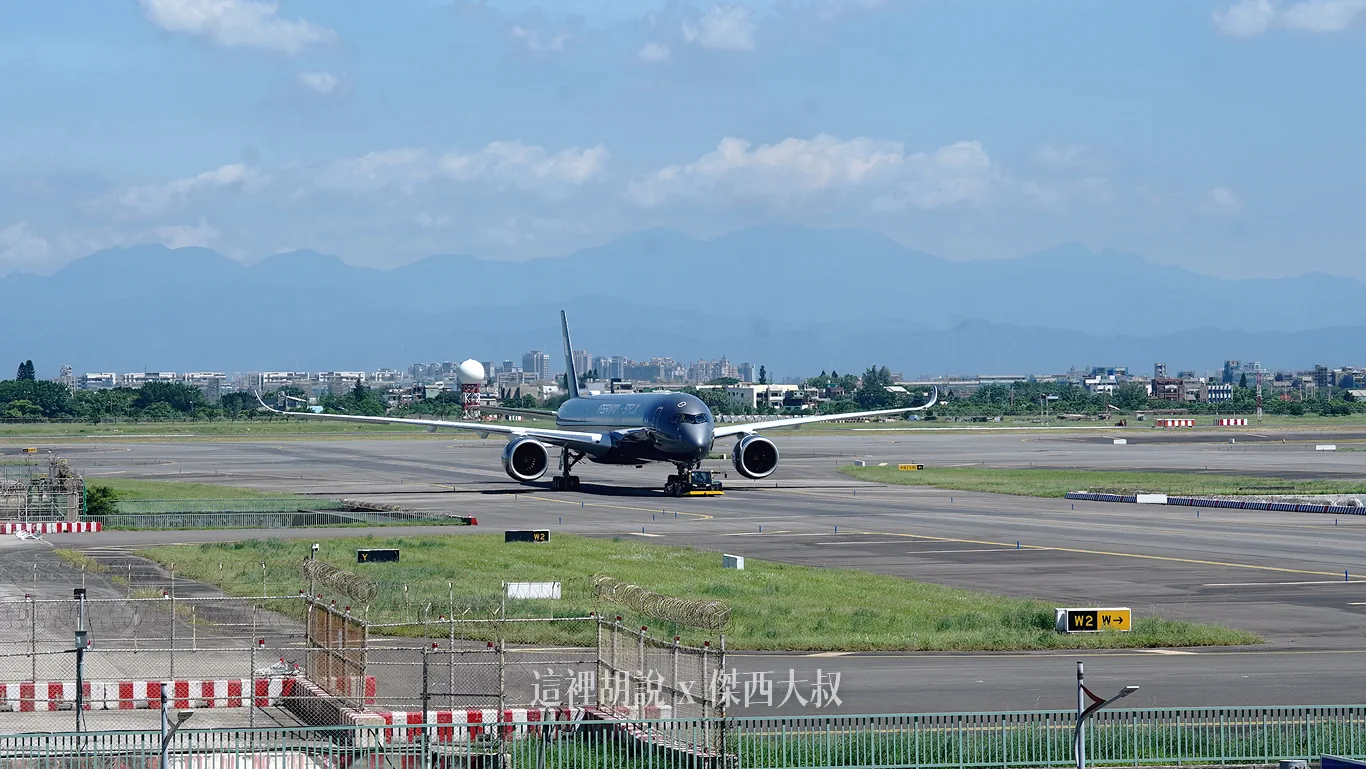
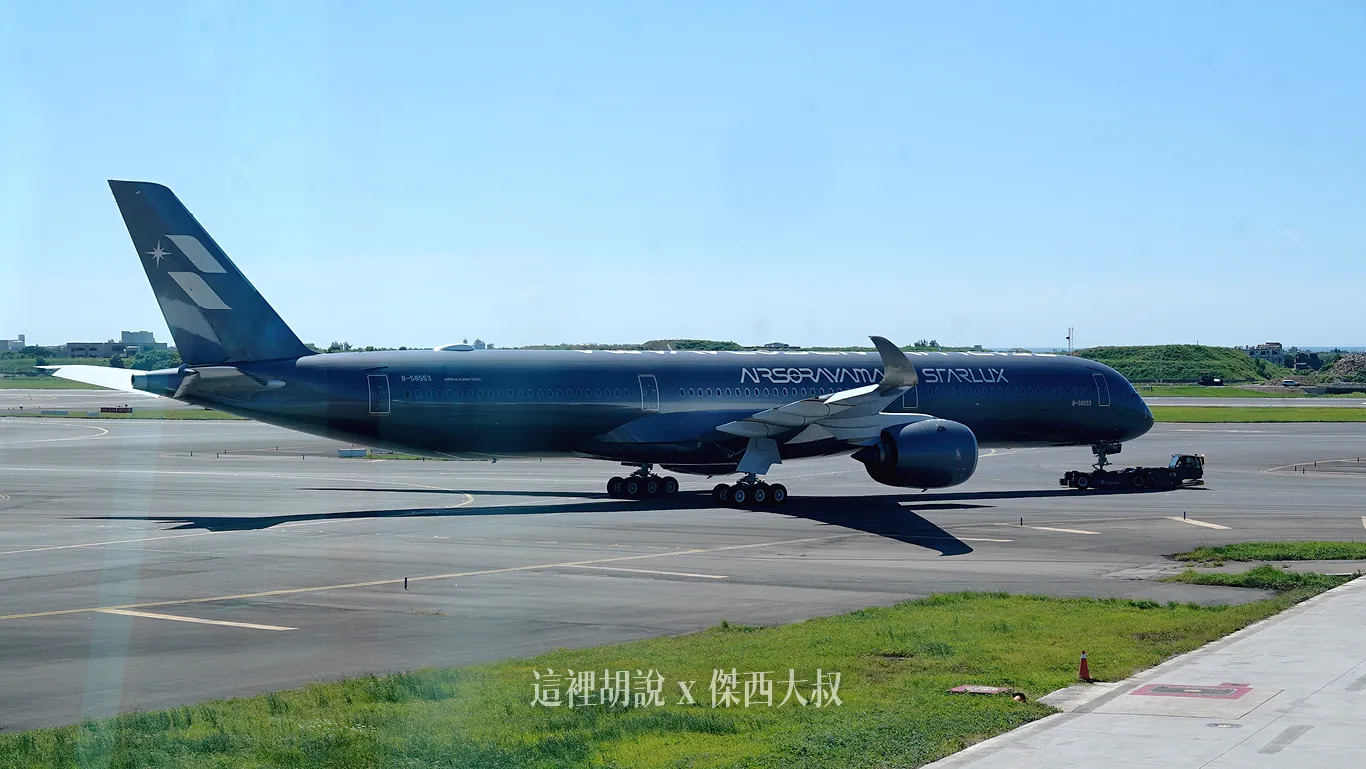
Situated at the very northern tip of the North Concourse, Gate D18 offers an atmosphere entirely distinct from any other gate. Located right alongside the northern and southern connector taxiways of Taoyuan Airport, it provides unobstructed views of moving aircraft. Because it sits mere meters from the active taxiway, aviation fans can enjoy breathtakingly close-up views of taxiing planes—arguably the single best plane-spotting location inside Taoyuan Airport’s secure zone.
However, because Gate D18 sits at the absolute extremity of the North Concourse, remember to budget ample walking time to reach your gate. Walking from a Terminal 1 gate to D18 can take anywhere from 30 to 40 minutes. The absolute maximum diagonal distance across the terminal spans from Gate D6 to B1R; Jesse once walked it, and it took about 30 minutes, so please plan accordingly.
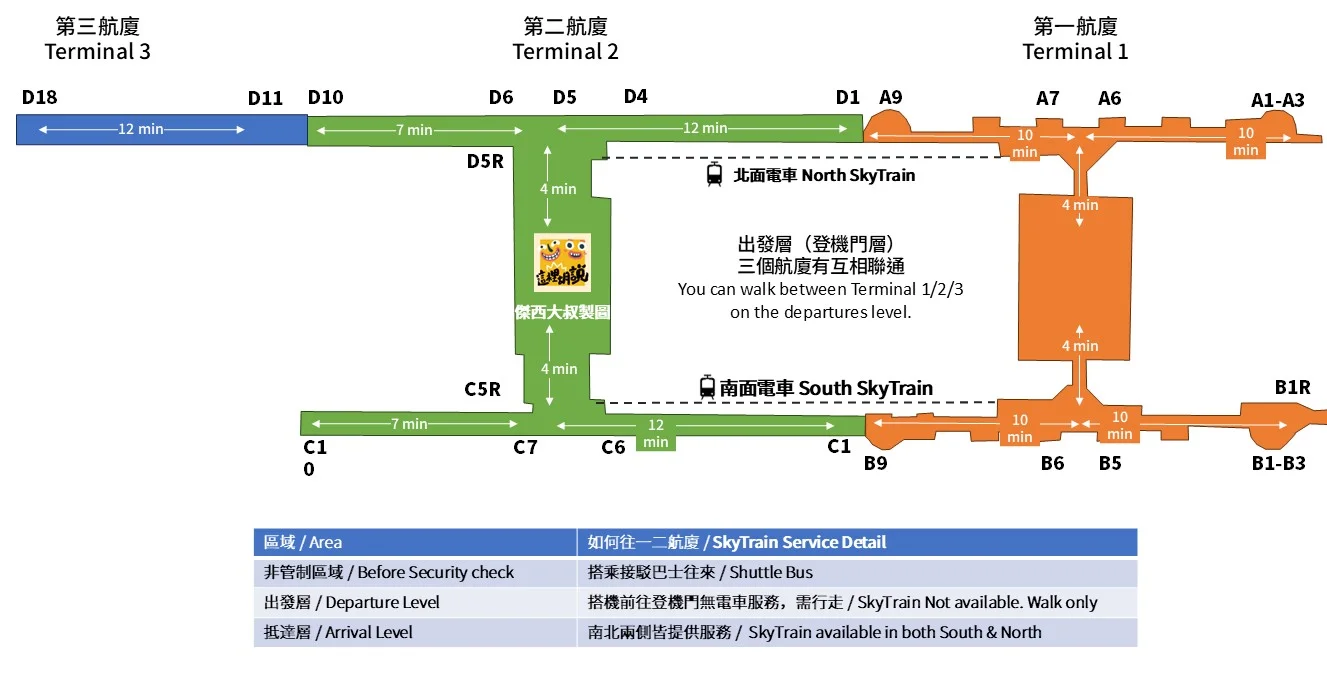
桃園機場平面圖:一二航廈在管制區內有互通,A區可以通往D區,B區可以通往C區
如果還沒拿到登機證:只能透過捷運、或者全天候航廈接駁車(專文說明)
The original text of this article is in Chinese, translated and edited into English by AI.
本文の原文は中国語であり、AIによって日本語に翻訳・編集されています。